

Published 14 October 2026 · Updated 14 October 2026
What is a logic model and how do you build one?
A logic model is a one-page picture of how a program is supposed to work: the resources you put in, the activities you run, the outputs you produce and the outcomes you expect, from immediate changes to long-term ones. To build one, start with the long-term change you want, work backwards to the shorter-term outcomes that lead to it, then list the activities, outputs and inputs needed to get there. Finish by naming your assumptions and adding indicators so you can tell whether the program is working.
Key takeaways
- A logic model is the program on one page. Inputs, activities, outputs and outcomes, laid out so anyone can see how the program is meant to work.
- Work backwards from the change you want. Start with the ultimate outcome, then the intermediate and immediate outcomes that lead to it.
- Outputs are not outcomes. Workshops delivered and clients served are outputs. Changes in knowledge, behaviour or circumstances are outcomes.
- Name your assumptions. Every arrow in the model depends on something being true. Write those assumptions down and test them.
- Keep it alive. Review the model as you learn, and use it to plan measurement, report to funders and onboard staff.
What this guide covers
- What a logic model is
- How a logic model fits with a theory of change
- Why build one even if no funder asks
- The building blocks
- Getting the outcome levels right
- Outputs are not outcomes
- How to build a logic model, step by step
- A worked example: a newcomer employment program
- Test the logic with if-then statements
- Assumptions and external factors
- Adding indicators, baselines and targets
- Choosing a format
- A lighter version for small programs
- Who to involve
- Building equity into the model
- Using your logic model with funders
- Turning the model into reports people read
- Keep the logic model alive
- Common mistakes funders spot first
- Frequently asked questions
What a logic model is
Most program staff can describe what they do in great detail. Fewer can explain, in a minute, how what they do leads to the change they promise funders. A logic model closes that gap. It is a simple, usually one-page picture of how a program is supposed to work, from the resources that go in to the difference that comes out.
The Treasury Board of Canada Secretariat’s Evaluation 101 backgrounder describes a logic model as a graphical representation of an initiative’s inputs, activities, outputs and outcomes. That plain definition is the one most Canadian funders and evaluators work from, whatever format they prefer.
A good logic model does three jobs at once. It helps you plan, because it forces you to check that your activities can realistically produce the outcomes you want. It helps you measure, because each outcome becomes something you can track. And it helps you communicate, because a board member, a new staff person or a funder can understand the program at a glance.
“A logic model is the program’s promise on one page: if we do these things, these changes should follow.”
This guide focuses on building one well. If you are designing a program from scratch, read our guide on how to design a nonprofit program alongside it, because the logic model is one part of that larger design work.
How a logic model fits with a theory of change
People often confuse logic models and theories of change, and funders sometimes use the terms loosely. They are related but different. The Treasury Board backgrounder describes the theory of change as the theory that supports the logic model: it explains the links between the elements, including assumptions, internal and external risks and key mechanisms.
In practice, the theory of change answers why: why should these activities lead to these outcomes for these people? The logic model answers what: what exactly goes in, what happens and what results are expected, in an orderly chain. Many organizations build the theory of change first and then translate it into a logic model for planning and reporting.
You do not need to be precious about the order. What matters is that the logic model is not just a list of activities with hopeful outcomes attached. Every link should rest on a reason you can explain. Our guide to the theory of change for nonprofits covers that reasoning in depth, so this article concentrates on the model itself.
Why build one even if no funder asks
Many organizations first meet logic models in a funding application and treat them as paperwork. That undersells them. Built properly, a logic model is one of the most useful internal tools a small nonprofit can have.
- It exposes gaps. If an outcome has no activity leading to it, or an activity leads to nothing, you see it immediately.
- It aligns the team. Staff, volunteers and board members agree on what the program is for and how it works.
- It focuses measurement. You measure the outcomes in the model, not everything you could possibly count.
- It speeds up proposals. Much of what funders ask for is already in the model.
- It supports learning. When results surprise you, the model shows which link in the chain to examine.
It also protects programs through staff turnover. When the coordinator who designed a program leaves, the logic model tells the next person what the program is meant to achieve and why it is built the way it is.
The building blocks
Different funders use slightly different labels, but nearly every logic model contains the same elements. Here they are in the order the program works, from left to right:
Inputs
The resources the program uses: staff, volunteers, funding, space, partners, equipment and expertise.
Activities
What the program actually does with those resources: workshops, coaching, outreach, referrals, events.
Outputs
The direct, countable products of the activities: sessions delivered, people served, materials distributed.
Immediate outcomes
The first changes in participants, often in knowledge, skills or awareness.
Intermediate outcomes
Changes that build on the immediate ones, often in behaviour, practice or circumstances.
Ultimate outcome
The long-term change the program contributes to, alongside other influences.
Two more elements sit around the chain rather than inside it. Assumptions are the things that must be true for each link to hold, such as participants being able to attend in the evenings. External factors are conditions outside your control that affect results, such as the local job market or housing costs. Good models name both.
Use your funder’s words. If a funder uses short-term, medium-term and long-term outcomes instead of immediate, intermediate and ultimate, use their labels in that application. The logic is the same; matching their language makes your model easier to assess.
Getting the outcome levels right
Outcome levels are where most logic models wobble. Immigration, Refugees and Citizenship Canada’s guidance on outcomes and measurement for funded service providers offers a clear example of how one federal funder defines them. It describes immediate outcomes as changes in participants as a result of outputs, typically achieved within 0 to 6 months after service. Intermediate outcomes are changes resulting from the immediate outcomes, typically beyond 6 months and up to 3 years. Ultimate outcomes are changes resulting from the intermediate outcomes, influenced by a variety of projects and stakeholders.
That last phrase matters. The Treasury Board backgrounder makes the same point about attribution: immediate outcomes are attributed directly to the intervention, while intermediate and long-term outcomes are attributable only in part to it. Your program contributes to the ultimate outcome. It does not cause it alone, and a credible model says so.
A practical test: for each outcome, ask whether your program could reasonably be held accountable for it. If the answer is fully, it is probably an immediate outcome. If the answer is partly, alongside other services and conditions, it is intermediate or ultimate. If the answer is barely, it may be the broader goal your organization works toward rather than an outcome of this program.
Outputs are not outcomes
The single most common mistake in logic models is listing outputs in the outcomes column. IRCC’s guidance draws the line clearly: outputs are completed activities, such as services delivered and clients served, while outcomes are changes in participants.
Spot the difference
- Output: 40 job search workshops delivered.
- Immediate outcome: Participants can write a résumé suited to Canadian employers.
- Output: 120 seniors received weekly phone check-ins.
- Immediate outcome: Seniors report knowing where to get help when they need it.
- Output: 500 food hampers distributed.
- Intermediate outcome: Families report skipping fewer meals over the winter.
Outputs still matter. They show the program happened at the scale planned, and funders usually want them. But a logic model with only outputs describes activity, not change. If every item in your outcomes column could be counted from your attendance sheets, keep working.
Watch for disguised outputs. Phrases like participants attended, clients accessed services or youth were engaged sound like outcomes but describe activity. Ask what changed for the person as a result.
How to build a logic model, step by step
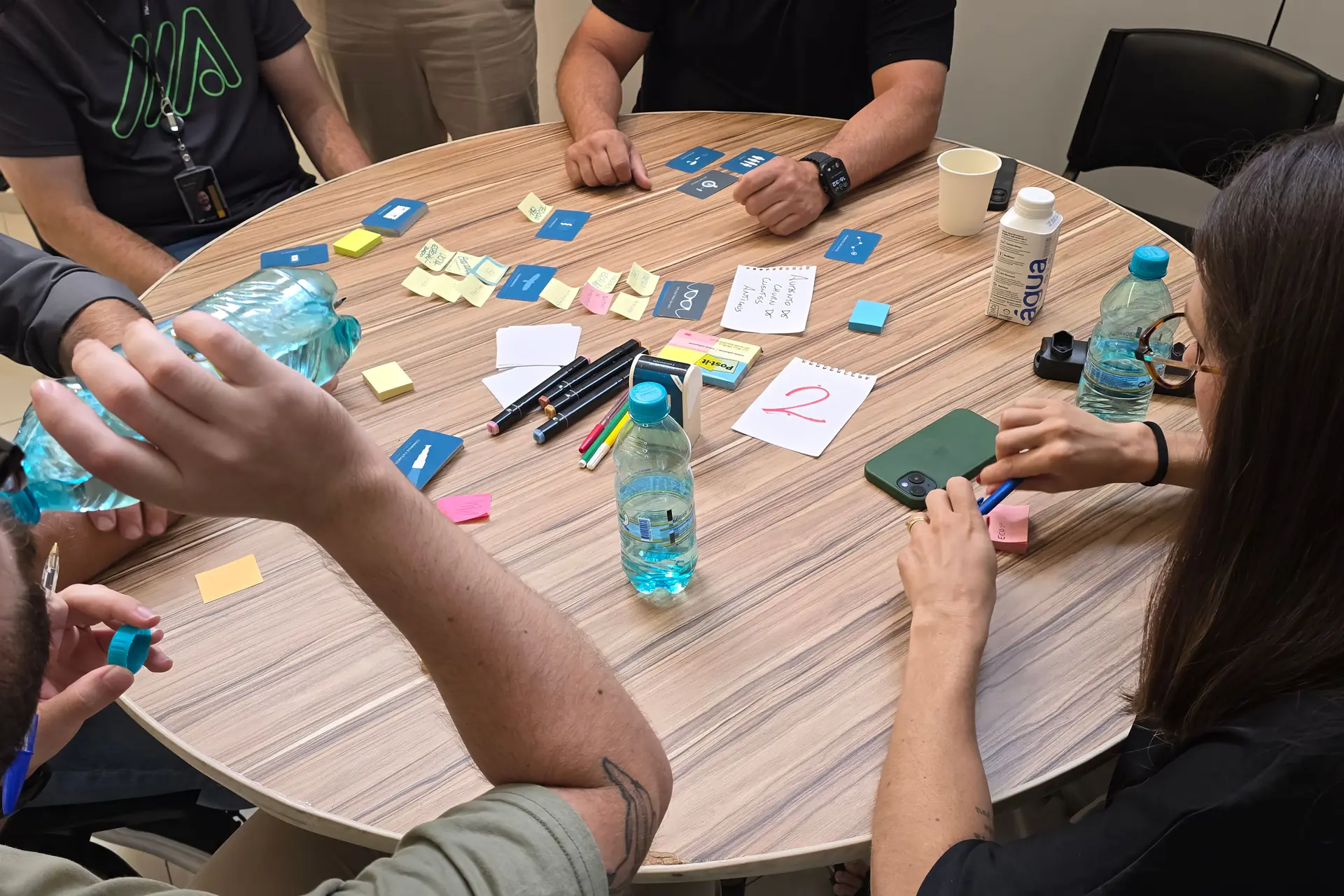
You can build a first draft in a two-hour working session with the right people in the room. Work backwards from the change you want, then forwards to check the logic.
- Name the ultimate outcome. The long-term change your program contributes to, in one sentence, for a specific group of people.
- List the intermediate outcomes. The changes in behaviour or circumstances that need to happen for the ultimate outcome to become possible.
- List the immediate outcomes. The first changes in knowledge, skills, attitudes or access that lead to the intermediate ones.
- Choose the activities. What the program does to produce those immediate outcomes. Cut any activity that does not clearly lead somewhere.
- Define the outputs. How you will count that the activities happened, at what scale.
- List the inputs. Staff, volunteers, money, space, partners and expertise the activities need.
- Name assumptions and external factors. What must be true for each link to hold, and what outside conditions could affect results.
- Read it left to right. Check that each step plausibly leads to the next, and fix the weak links.
Expect several drafts. The first version usually has too many outcomes and too few honest assumptions. Trim it until a newcomer to the program could follow the chain without explanation.
A worked example: a newcomer employment program
Here is a simplified, hypothetical example to show how the pieces fit together. Say a settlement agency runs a twelve-week employment readiness program for newcomers to Canada.
Example logic model
- Inputs: Two employment counsellors, volunteer mentors, a training room, partnerships with local employers, a funding grant.
- Activities: Weekly workshops on job search in Canada, one-on-one coaching, mock interviews with volunteer mentors, employer networking events.
- Outputs: Twelve workshops delivered per cohort, coaching sessions completed, mock interviews held, networking events run.
- Immediate outcomes: Participants understand Canadian hiring practices, have a résumé suited to local employers and feel more confident interviewing.
- Intermediate outcomes: Participants apply for suitable jobs, get interviews and secure employment related to their skills.
- Ultimate outcome: Newcomers achieve stable employment that uses their skills, contributing to their economic integration.
- Assumptions: Participants can attend evening sessions; employers are hiring in relevant fields; participants have work authorization.
- External factors: Local labour market conditions, credential recognition processes, child care availability.
Notice how the ultimate outcome is worded as something the program contributes to rather than delivers alone. Notice too how the assumptions point to real risks: if child care is a barrier, attendance drops and the immediate outcomes fall with it. That is a design question, not just a measurement one.
Try sketching the same example from a different angle. If the agency decided that employer relationships were the real bottleneck, the activities column might add employer information sessions and paid work placements, the outputs would count placements arranged, and a new immediate outcome would appear for employers: a better understanding of newcomers’ credentials and experience. The ultimate outcome stays the same. The route to it changes, and the logic model makes that strategic choice visible to everyone who reads it, from staff to funders.
Test the logic with if-then statements
A quick way to check a draft is to read it aloud as a series of if-then statements. If we have these inputs, then we can run these activities. If we run these activities, then we will produce these outputs. If participants take part, then these immediate changes should follow. And so on, all the way to the ultimate outcome.
Every time an if-then sounds unconvincing, you have found a weak link. Maybe one workshop is not enough to change confidence. Maybe the leap from a better résumé to a job ignores the role of employer networks. Weak links are not failures. They are the most useful thing a logic model can show you, because they tell you where to strengthen the program or where to look first when results disappoint.
Invite someone who does not work on the program to listen. Board members and partners often spot jumps in logic that staff stopped noticing years ago.
Assumptions and external factors
Assumptions are the beliefs the model relies on. Some are about participants: that they can attend, that they want the outcome, that the program fits their language and culture. Some are about the program: that staff have the right skills, that partners will follow through. Some are about the wider world: that jobs exist, that services are available to refer people to.
Write them down and rate how confident you are in each. Low-confidence assumptions deserve attention: test them early, design around them or monitor them closely. The Treasury Board backgrounder notes that a theory of change describes assumptions, internal and external risks and key mechanisms, and your logic model is where those risks become visible to everyone.
Turn risky assumptions into design choices. If your model assumes participants can attend evening sessions, ask them. If many cannot, add a daytime cohort or child care before launch rather than discovering the problem in the evaluation.
Adding indicators, baselines and targets
A logic model becomes a measurement plan when you attach indicators to the outcomes. IRCC’s guidance defines indicators as ways of measuring change or progress toward outcomes, a baseline as a specific value against which outcomes will be measured, and a target as the value of the indicator the project aims to reach or surpass. It also advises that outcomes should be SMART: specific, measurable, achievable, relevant and time-bound.
- Pick one to three indicators per outcome, not ten.
- Make sure you can actually collect the data without burdening participants.
- Set a baseline before the program starts where you can.
- Set targets you could defend to a funder, based on experience rather than hope.
Our guide to nonprofit outcome measurement goes deeper on choosing indicators and collecting data without overwhelming a small team.
Choosing a format
There is no single correct layout. Choose the one your team will actually use, and adapt to funders’ templates when they require one.
Columns
Inputs to ultimate outcome from left to right. The classic format and the one most funders recognise.
Table
Rows for each activity, with its outputs and outcomes beside it. Useful when activities lead to different outcomes.
Flow diagram
Boxes and arrows showing how outcomes connect. Helpful when several activities feed the same outcome.
Keep it to one page wherever possible. If it will not fit, the program may be several programs, or the model may be listing every detail rather than the main logic. Put the detail in a supporting document and keep the model readable.
A lighter version for small programs
Not every program needs a full-scale model with six columns, risk ratings and a page of indicators. A volunteer-run drop-in, a seasonal youth camp or a pilot with a small grant can work perfectly well with a lighter version, as long as the logic is still there.
A good light version fits on half a page. Write one sentence for the ultimate outcome you contribute to, two or three immediate outcomes the program can realistically deliver, the main activities that lead to them and the two assumptions you are least sure about. Add one indicator for each immediate outcome. That is enough to plan, to explain the program to a funder and to know whether it is working.
The light version also makes a good starting point for organizations that have never built a logic model. Once the team is comfortable with the idea, it is easy to add intermediate outcomes, external factors and more detailed outputs as the program grows or a larger funder asks for them.
Start with what you would tell a neighbour. If you can explain in three sentences what the program does, who it is for and what changes for them, you already have the bones of a logic model. The rest is putting those sentences in order.
Who to involve
Logic models built by one person at a desk tend to describe how the program was meant to work rather than how it does work. Involve the people who know the program from different angles.
- Front-line staff and volunteers know what actually happens and where participants struggle.
- Participants and community members can say which outcomes matter to them and which assumptions are wrong.
- Managers and finance confirm what resources are really available.
- Partners clarify which outcomes depend on their services, not yours.
- The board checks that the program fits the organization’s strategy.
Involving participants is especially valuable and often skipped. People who use a program frequently describe its real benefits differently from staff, and those differences can reshape your outcomes column.
Building equity into the model
A logic model can quietly assume that every participant starts in the same place and faces the same barriers. Real programs rarely work that way. Newcomers, people with disabilities, people working shifts, parents without child care and people in rural areas can all face obstacles that break the chain between activities and outcomes.
Look at each assumption and ask who it might not be true for. If the model assumes participants can travel to an evening workshop, who is left out? If it assumes participants read English comfortably, which outcomes become harder to reach for those who do not? Answering these questions often changes the activities column, adding interpretation, flexible scheduling, transportation help or outreach through trusted community partners.
It also changes how you measure. Where you can, plan to look at outcomes for different groups rather than only an overall average. A program that works well on average can still be failing the people it most wants to reach, and the logic model is where you decide to look for that.
Using your logic model with funders
Many Canadian funders ask for a logic model or for content that follows the same chain: activities, outputs and outcomes at different levels. When you have a good model, you can answer those sections quickly and consistently, adapting labels to each funder’s template.
Use it to keep promises realistic. Funders appreciate a model that commits to immediate outcomes the program can deliver and describes longer-term outcomes as contributions. Overpromising ultimate outcomes in an application creates reporting problems later.
For guidance on presenting your model within a full application, see our guide on how to write a grant proposal in Canada. Your logic model also strengthens your case for support, because it shows donors exactly how their gift turns into change.
Turning the model into reports people read
Once a program is running, the logic model gives your reports a ready-made structure. Report inputs and outputs briefly to show the program ran as planned, then spend most of the space on outcomes: what changed, for whom, and how you know. Finish with what you learned about your assumptions and what you will adjust.
That structure works for funders, boards and the community alike, because it answers the questions they actually have. It also keeps reports honest. When an outcome did not move as hoped, the model helps you explain which link in the chain broke and what you are doing about it, which most funders respect far more than a report that only lists successes.
For more on presenting results to different audiences, see our guide to nonprofit impact reporting.
Keep the logic model alive
A logic model is a hypothesis about how your program works. As you deliver the program and collect data, you will learn which links hold and which do not. Update the model when you learn something important, rather than leaving it in a drawer until the next application.
A simple rhythm works for most organizations: review the model with staff once a year, check it against your outcome data, and update assumptions and activities as the program changes. Keep old versions so you can see how the program has evolved.
Use it for onboarding. Give every new staff member and volunteer the logic model in their first week. It explains the program’s purpose faster than any manual.
When you are ready to test whether the program is achieving its outcomes, the logic model becomes the backbone of your evaluation. Our nonprofit program evaluation guide explains how to take that next step.
Common mistakes funders spot first
Six mistakes to avoid
- Outputs in the outcomes column. Counting activity instead of change.
- Outcomes nobody could measure. Vague phrases like improved well-being with no indicator attached.
- Giant leaps. Going from one workshop to life-changing results with nothing in between.
- Missing assumptions. A model that ignores attendance barriers, partner capacity or the job market.
- Overclaiming. Presenting the ultimate outcome as something the program delivers alone.
- A model nobody uses. Built for a funder, filed away and never updated.
Further reading: the W.K. Kellogg Foundation’s Logic Model Development Guide remains a widely used introduction for nonprofits, and it pairs well with the Canadian government guidance linked above.
Want a logic model your team will actually use?
For Good Consultants facilitates logic model and theory of change sessions with your staff, participants and board, and builds the measurement plan that goes with them.
Frequently asked questions
What is a logic model?
A logic model is a one-page picture of how a program is meant to work: inputs, activities, outputs and outcomes. The Treasury Board of Canada Secretariat describes it as a graphical representation of an initiative’s inputs, activities, outputs and outcomes.
What are the main components of a logic model?
Inputs, activities, outputs and outcomes, with outcomes usually split into immediate, intermediate and ultimate levels. Good models also list assumptions and external factors that affect whether the chain holds.
What is the difference between outputs and outcomes?
Outputs are completed activities, such as workshops delivered or clients served. Outcomes are changes in participants, such as new skills, changed behaviour or improved circumstances.
How is a logic model different from a theory of change?
A theory of change explains why and how change happens, including assumptions and mechanisms. A logic model lays out what goes in and what results are expected in an orderly chain. Many organizations build both.
How long should a logic model be?
Ideally one page. If it cannot fit, the program may be several programs, or the model may include detail that belongs in a supporting document.
What is the difference between immediate, intermediate and ultimate outcomes?
They describe changes over time. IRCC’s guidance for funded service providers describes immediate outcomes as typically within 0 to 6 months, intermediate as beyond 6 months up to 3 years, and ultimate outcomes as influenced by many projects and stakeholders.
Do Canadian funders require logic models?
Many ask for one or for content that follows the same structure. Government funders such as IRCC use outcome levels and indicators in their guidance, so a clear logic model makes applications faster and more consistent.
How often should we update our logic model?
Review it at least once a year and whenever you learn something important from your data or change the program. Keep earlier versions to show how the program has evolved.